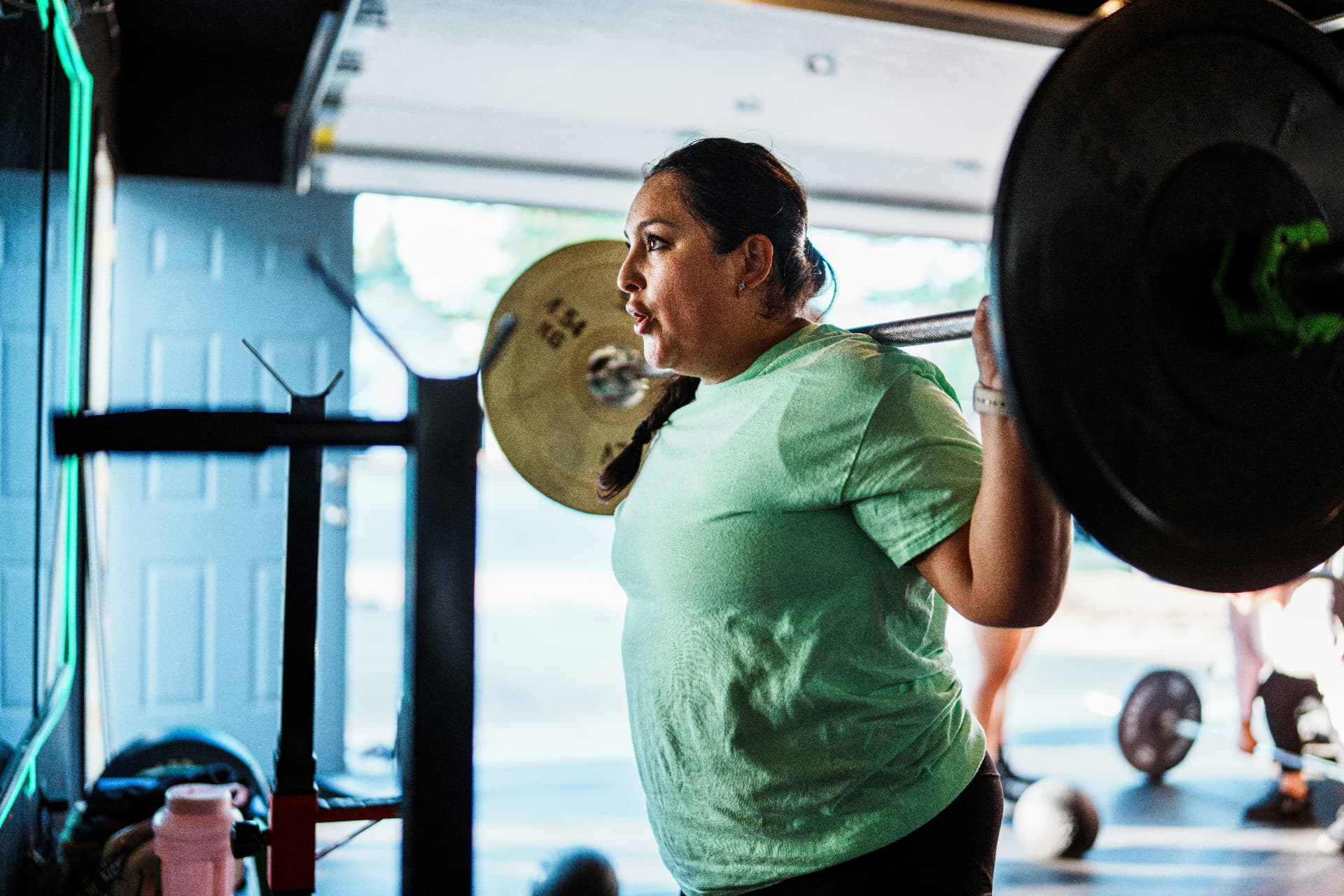
A practical guide to starting — and keeping — a strength training program after 50. What to lift, how often, what changes for women after menopause, and what the published research supports.
What actually changes after 50
Muscle mass falls away when nothing asks it to stay, bone loses mineral, and balance and reaction time slow. None of that is a reason to train gently — it is the reason to train properly. Resistance training is the one activity that pushes back on all three at once.
Start with five patterns, not twenty exercises
A squat, a hinge, a push, a pull and a carry cover almost everything your body does in real life. Learn those five with light weight for a fortnight, then keep the same lifts and let the weight climb. Variety feels productive; progression is what builds you.
Two to three sessions a week is plenty
Full-body sessions, a handful of compound lifts, three sets of five to eight reps, stopping a rep or two short of failure. Consistency across six months beats a heroic fortnight every time.
For women over 50, menopause changes the dose
The years around menopause bring the fastest drop in bone density of any stage of life, along with muscle and tendon loss. That means a bigger share of resistance training — three to four sessions a week — loads that genuinely get heavier, and safe impact work for bone. Women respond very well to training, which is exactly why the dose matters here.
Recovery is the limit, not your age
After 50 the lifting is rarely what holds people back. Sleep, stress and protein are. That is why we track a short daily check-in next to your lifts, so a bad fortnight shows up as data instead of a mystery.
Nothing here is medical advice
This is general education. If you have a heart condition, uncontrolled blood pressure, osteoporosis, a recent injury, or you are simply unsure, talk to your doctor before starting.
Is it safe to start strength training over 50?
For most healthy adults, yes — supervised, progressive strength training has one of the lowest injury rates of any popular activity for adults over 40. Start light, learn the positions, then add weight. If you have a heart condition, uncontrolled blood pressure or a recent injury, speak to your doctor first.
How often should you strength train over 50?
Two to three full-body sessions a week is enough to build strength and hold on to muscle. Women after menopause often do better with three to four resistance sessions a week, because bone and muscle loss speeds up in those years.
How to begin a strength training program over 50
Pick five movement patterns — a squat, a hinge (like a deadlift), a push, a pull and a carry. Spend two weeks learning them with light weight, then add a small amount of load each session for the next month. Write every set down so you can see the weight climbing.
Can you still build muscle after 50?
Yes. Muscle and bone respond to loading at every age studied, including people in their 80s and 90s. Progress is slower than at 25, but the direction is the same: heavier lifts over months means more muscle, more strength and denser bone.
Is walking enough, or do you need weights?
Walking is excellent for your heart, but it does not ask enough of your muscles or your skeleton to stop age-related loss. Walking plus two strength sessions a week covers both.